

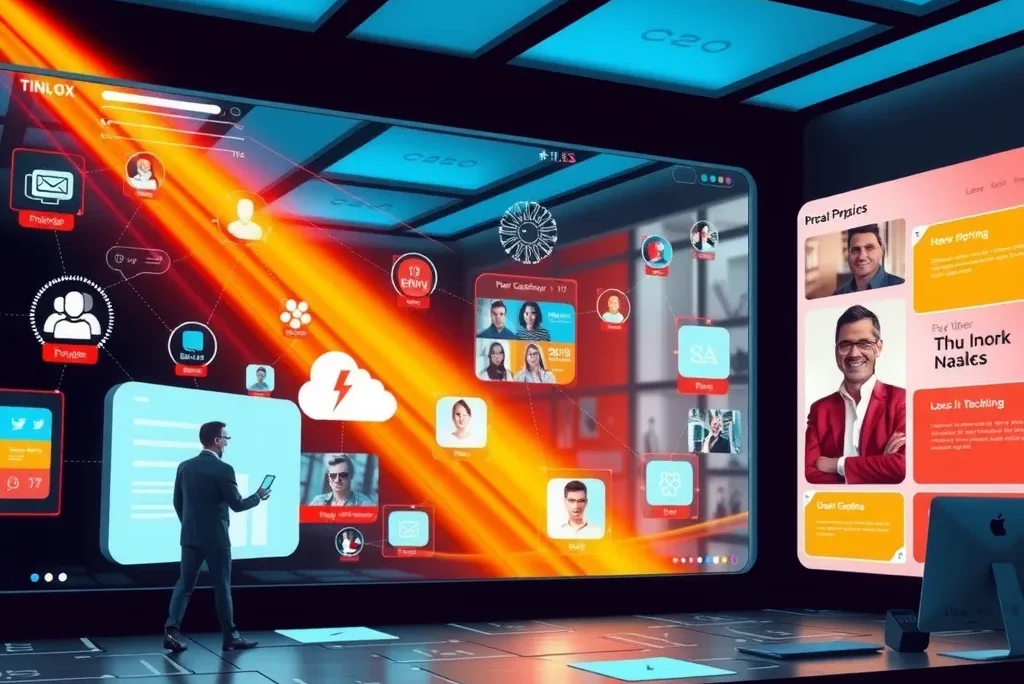
The Growth of Visual Content in Marketing: Trends and Future Perspectives
In the rapidly changing world of digital marketing, visual content has become key to capturing audiences and sharing brand messages. As tastes shift towards more interactive and immersive experiences, its importance continues to grow, influencing every aspect of marketing plans. Faster mobile networks, high-resolution screens, and algorithmic feeds that reward watch time and engagement have accelerated this shift, favoring formats that can communicate quickly and memorably. Strong visuals cut through noise, aid comprehension, and create emotional resonance that pure text rarely achieves. They also travel well across borders, bypassing language barriers and improving accessibility when paired with thoughtful descriptions and captions. For brands, this means visual communication is no longer a creative afterthought but a strategic capability that influences awareness, preference, and conversion. This article explores current trends and anticipates future developments in visual content, offering insights for businesses aiming to stand out in a busy digital environment and build durable connections with the people they serve.
Grasping Visual Content
Visual content includes imagery, video, graphics, and design used to express ideas. It spans photography, illustrations, icons, data visualizations, infographics, motion graphics, carousels, memes, screen recordings, and immersive 3D scenes. The field has evolved significantly, transitioning from static print visuals to interactive, digital formats that adapt to screens, orientations, and contexts. Social platforms have accelerated the move toward snackable visuals and story-driven sequences, while websites and apps increasingly rely on visual cues to guide behavior. Beyond aesthetics, visuals serve cognitive and behavioral roles: people process images faster than text, remember them longer, and are more likely to share content that is visually distinctive. Search engines and marketplaces now surface rich thumbnails and previews, making visual quality a driver of discoverability and click-through rates. In this broader sense, visual content is both craft and system—an integrated layer that supports marketing across sectors, driven by the need to grab attention, explain value succinctly, and make a lasting impact.
Graphic and 3D Design in Branding
Graphic design has long been crucial to branding, and the emergence of 3D design has widened how brands express their identity. Modern identity systems extend beyond logos to include color, type, illustration styles, motion principles, sound cues, and modular layouts that work across touchpoints. Once specialized, 3D is now commonplace, enabling captivating visuals that engage and maintain interest, from photoreal product renders that replace costly photoshoots to playful stylized worlds that express personality. For e-commerce, 3D models and 360-degree spins help shoppers evaluate details, while configurable scenes let people choose colors or finishes before buying. Brands like Nike and Coca-Cola have incorporated 3D elements into campaigns, setting new standards for visual storytelling and demonstrating how motion and depth can reinforce narrative and emotion. Practical considerations matter too: lightweight formats such as glTF and USDZ, GPU-efficient materials, and careful lighting keep load times in check, while accessibility practices—clear contrasts, descriptive captions, and alternative views—ensure that expressive design remains inclusive. The result is a richer, more flexible brand toolkit.
The Influence of Video Production
Video remains the leading force in digital marketing and one of the most engaging visual types. Platforms like YouTube and TikTok have nurtured a video-centric culture, raising production quality and storytelling to higher levels while proving that authenticity can outperform polish when the message is clear. Short-form vertical clips power discovery and frequency, whereas long-form explainers, webinars, and documentaries deepen education and trust. Key trends include live streaming and interactive video, which allow real-time interaction and closer audience connections through comments, polls, and on-screen calls to action. Commerce features increasingly bridge content and checkout, turning product demos into shoppable moments. To perform in muted, autoplay environments, creators rely on on-screen titles, captions, and strong opening seconds that hook attention. Data closes the loop: heatmaps, retention curves, and A/B tests of thumbnails, hooks, and end screens guide iterative improvements. A simple but rigorous workflow—strategy, scripting, storyboarding, production, edit, and distribution—ensures each asset has purpose, reach, and measurable impact.
UI/UX Design: Shaping User Experiences
User Interface (UI) and User Experience (UX) design are vital to attracting and keeping users. Thoughtful interfaces make interactions intuitive and enjoyable, which boosts engagement and reduces friction that can quietly erode conversions. Visual hierarchy, clear typography, and generous spacing help people scan and decide, while microinteractions—subtle animations, haptic feedback, progress states—provide reassurance and momentum. Leading companies use refined UI/UX to guide people smoothly through digital experiences, enhancing satisfaction and conversion rates across web, mobile, and in-store screens. Inclusivity is essential: accessible color contrast, keyboard navigation, captions, and meaningful alt text expand reach and signal respect. Performance is part of experience too; optimized images, vector graphics, AVIF or WebP formats, and lazy loading maintain visual richness without sacrificing speed. Personalization, when transparent and privacy-conscious, tailors visuals to context—surface the right hero image, simplify choices, and adapt components for location or device. Together, these practices turn visuals from decoration into guidance, helping customers complete tasks with confidence.
Future Perspectives and Innovations
Looking forward, technologies like Artificial Intelligence (AI) and Augmented Reality (AR) are set to revolutionize visual content. AI enables large-scale personalization, generating and adapting imagery, layouts, and video variations to fit audiences, channels, and moments—while also assisting with tasks like background removal, color grading, and accessibility checks. As these tools mature, human creativity shifts toward direction, curation, and ethics: ensuring provenance, preventing bias, and signaling when content is synthetic. AR and Virtual Reality (VR) provide immersive experiences that will change how users interact with brands, from try-before-you-buy overlays and spatial instructions to collaborative product demos and training. WebAR lowers barriers by running in the browser, while emerging spatial computing platforms promise room-scale storytelling and productivity. Advances in 5G, edge rendering, and real-time engines will make high-fidelity visuals more responsive, and new formats will standardize 3D asset pipelines across marketing and commerce. With these gains come responsibilities—measurement beyond clicks, respect for privacy in a cookieless world, and sustainability practices that consider the energy footprint of media production and delivery. To stay competitive, businesses should actively embrace these tools, build governance around them, and integrate them into their visual content strategies with clear goals and guardrails.
Conclusion
Visual content is at the forefront of marketing’s transformation. As technology progresses and expectations climb, knowing how to create and implement effective visual strategies is more crucial than ever. The most successful teams pair a cohesive visual language with agile execution: a living design system, a disciplined video workflow, an accessible UI, and a test-and-learn mindset that treats data as creative fuel. Practical next steps include auditing current assets, clarifying the stories you want to tell, defining guardrails for AI-assisted creation, and piloting new formats—such as shoppable video or lightweight AR—that align with customer needs. Measure what matters to your funnel, celebrate what works, and retire what doesn’t. By embracing today’s trends and preparing for the future, businesses can remain relevant and connected to their audiences. The future of marketing is visual, and those who act on these insights now will lead tomorrow’s market with experiences that are clearer, kinder, and more compelling.